Staircase Chandeliers vs Linear Chandeliers: Which Fits Your Space?

Large open areas need lighting with enough presence to feel intentional. A small ceiling fixture may provide light, but it can look lost above a tall stairwell, long dining table, or generous kitchen island. Staircase and linear chandeliers solve different versions of this problem by using the shape of the room as part of the design.
A staircase chandelier usually develops vertically, filling height and creating interest from several levels. A linear chandelier extends horizontally, following the length of a table, island, or open-plan zone. Choosing between them begins with understanding whether the space needs vertical drama or horizontal balance.
Start With the Shape of the Empty Space
Look beyond the floor plan and consider the volume of air the fixture will occupy. A stairwell may be narrow on the floor but extend through two or three storeys. A dining room may have an ordinary ceiling height yet contain a long table that needs a fixture with similar visual direction.
The chandelier should help explain the architecture. A vertical design draws the eye upward and emphasises height. A horizontal design brings attention back toward the furniture and creates a clearer centre within a wide room.
When a Staircase Chandelier Works Best
Stairwells are viewed from unusual angles. A fixture may be seen from the entrance, landing, upper hallway, and steps, so it needs to remain interesting from more than one direction. Clustered globes, cascading crystals, suspended rings, and long sculptural forms can turn unused vertical space into a focal point.
Well-proportioned Staircase Chandeliers are particularly effective in double-height entrances, spiral staircases, and open stair voids. Their vertical arrangement connects different levels visually while leaving the floor area unobstructed. The design should complement the staircase rather than hide its railing, windows, or architectural details.
When a Linear Chandelier Is the Better Choice
Linear chandeliers distribute visual weight along a horizontal axis. This makes them a natural fit above rectangular dining tables, kitchen islands, long desks, billiard tables, and seating areas. Their elongated form can provide more even coverage than one compact light placed in the centre.
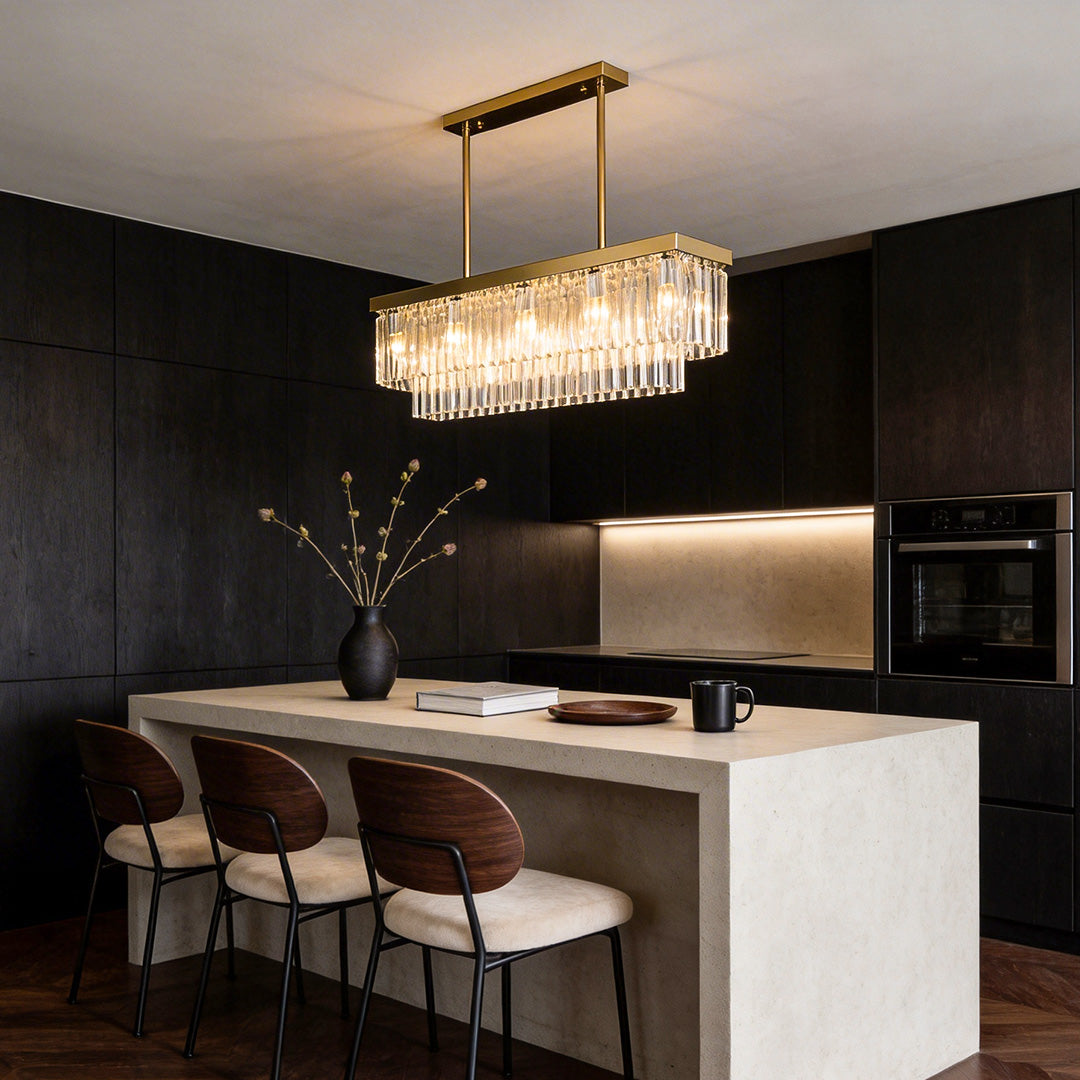
A Linear Chandelier can also help define one activity zone within an open-plan interior. Suspended above the dining table, it separates the eating area visually without requiring walls. Designs range from simple bars and geometric frames to branch-like forms and arrangements of multiple glass shades.
Compare Ceiling Height and Hanging Clearance
Staircase chandeliers generally require more vertical clearance and a carefully planned drop. The lowest point must remain safely away from steps, landings, and areas where people pass beneath it. Linear chandeliers usually hang above furniture, which creates a protected zone and makes their height easier to manage.
Before purchasing either type, record the ceiling height, fixture height, canopy size, and adjustable suspension range. For stairwells, measure from both the lowest floor and the nearest landing. For tables and islands, consider whether the light will block views or conversation across the surface.
Think About Scale and Visual Weight
Dimensions alone do not tell the full story. A chandelier with open metal frames may feel light even at a large size, while a dense arrangement of crystals or opaque shades can appear much heavier. Photographs should be compared with listed measurements rather than used as the only guide.
Plan Light Quality, Not Just Appearance
A chandelier must illuminate the intended area comfortably. A staircase fixture may provide ambient light throughout several levels, but wall lights or step lights are still useful for safe movement. A linear fixture above a table or island should spread light across the surface without producing glare.
Clear glass creates sparkle and exposes the bulbs, while frosted glass softens the source. Integrated designs may produce a more even line of light. Dimming is valuable in both locations because brightness needs change between everyday use, entertaining, and late evening.
Consider Installation and Maintenance
Large chandeliers need secure support and careful electrical installation. Stairwell fixtures can be especially difficult to reach after installation, so bulb access and cleaning should be considered before choosing a complex design. A lowering system or planned access method may be worthwhile in very tall spaces.
Use a qualified professional to confirm ceiling support, wiring, mounting, and safe clearance. Planning these details early prevents a beautiful fixture from becoming difficult to install or maintain.
Make the Final Choice
Choose a staircase chandelier when the room’s defining feature is height and the light will be viewed from several levels. Choose a linear chandelier when the main feature is a long table, island, or horizontal zone that needs balanced coverage.
Both options can become memorable focal points, but the architecture should lead the decision. Measure carefully, study sightlines, and consider the fixture’s appearance both lit and unlit. When its direction matches the shape of the space, the chandelier will feel naturally connected rather than simply added for decoration.